Healthcare / Plumbing VDC & MEP Coordination
NYU Langone Patchogue Ambulatory Surgical Center
How Heleos VDC delivered plumbing design coordination, clash detection, and MEP coordination for the NYU Langone Patchogue Ambulatory Surgical Center — an Article 28 adaptive-reuse healthcare project carved out of a vacant Main Street department store in Patchogue, NY.
Project Facts
- Location: Patchogue, NY (Long Island)
- Building type: Article 28 ambulatory surgery center (adaptive reuse)
- Size: ~55,000 sq ft · 2 stories
- Program: 6 operating rooms + 4 procedure rooms
- Primary service: Plumbing & MEP Coordination
- Services used: Plumbing Coordination, Clash Detection, MEP Coordination, Shop Drawings
- Model level: LOD 350/400 fabrication-grade plumbing model
- Engaged by: Lakeville Pace Mechanical (plumbing trade contractor)
- Project team: EW Howell Construction Group (CM), CannonDesign (architect), Cosentini Associates (MEP engineer)
- Deliverable: LOD 350/400 Revit Fabrication plumbing model, clash remediation, MEP trade coordination, shop & penetration drawings
Project Overview
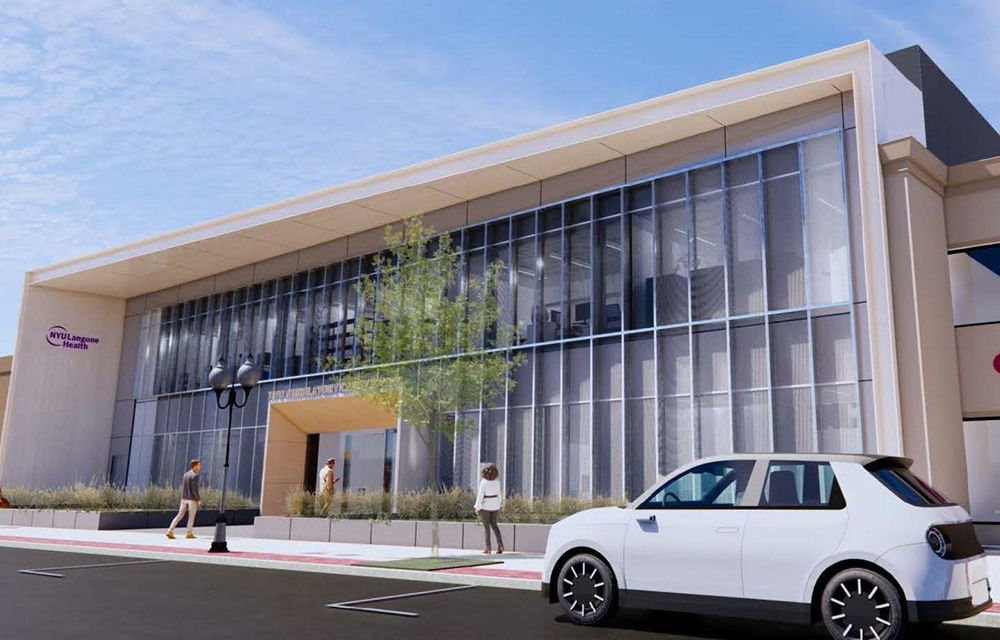
A vacant Main Street department store became one of Long Island's newest surgical centers — and every pipe had to clear structure and four other trades before a single fitting was cut.
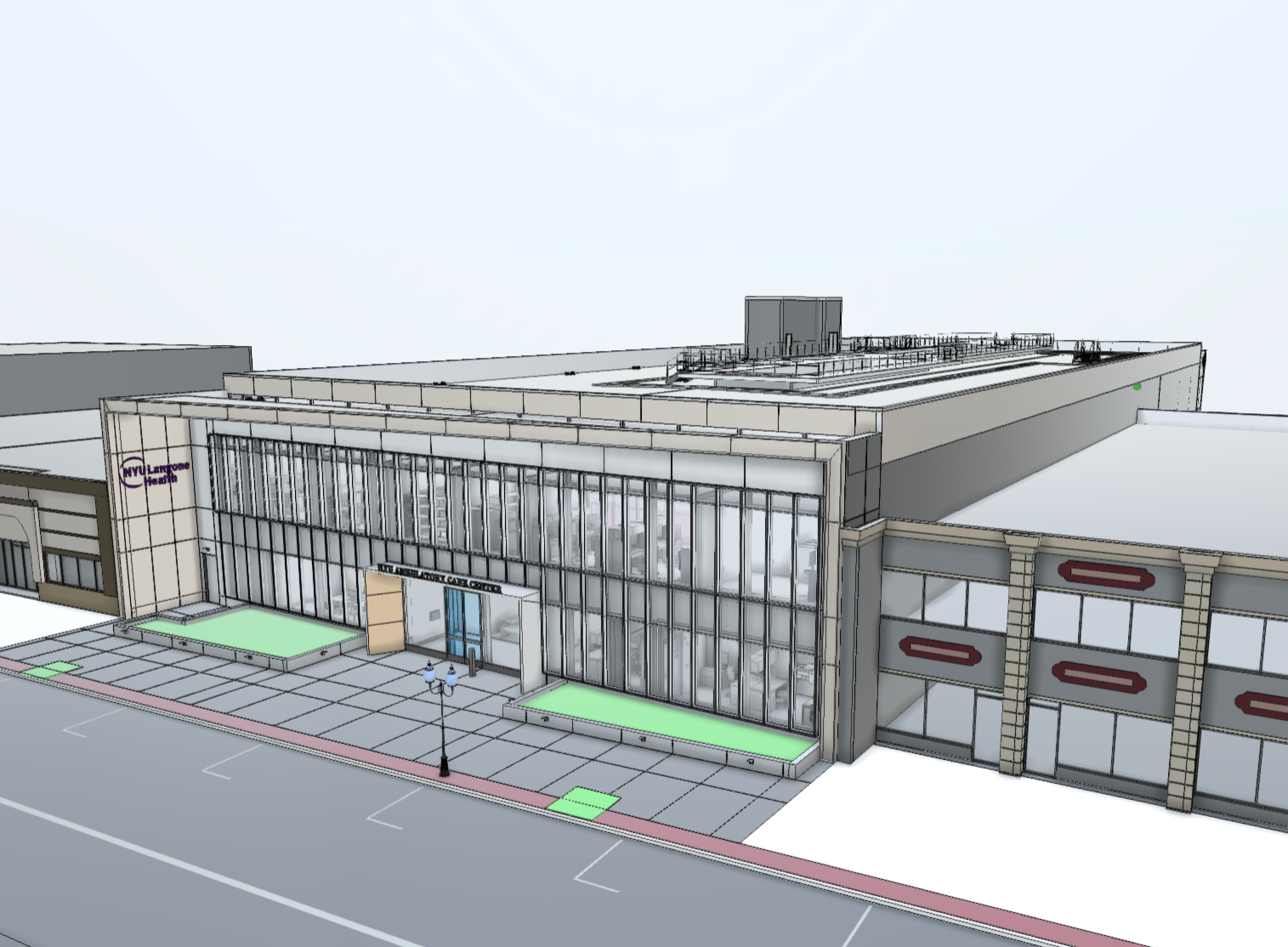
At 196 East Main Street in Patchogue, NYU Langone Health is converting a long-vacant retail building — first the BeeHive, then Mid-Island Department Store, and for nearly three decades a Burlington Coat Factory — into a two-story, 55,000-square-foot ambulatory surgical center. The program holds six operating rooms and four procedure rooms, with EW Howell Construction Group as Construction Manager, CannonDesign as architect, and Cosentini Associates as MEP engineer.
Heleos VDC was engaged by the plumbing trade contractor, Lakeville Pace Mechanical, to model and coordinate the building's plumbing systems. Our job was to take the engineer's plumbing design and develop it into a coordinated, fabrication-ready model — clash-free against structure and the mechanical, fire-sprinkler, and electrical trades — before installation began. On an Article 28 surgery center built inside an old retail shell, that coordination is where budget and schedule are won or lost.
The Challenge
Adaptive reuse means you inherit a building, not a blank slate. The existing roof structure and mechanical penthouse were removed, new side walls and a new roof went up, and fresh foundation work — underpinning, footings, and elevator pits — was added beneath a box that had been retail for half a century.
Then the program raised the bar. As an Article 28 ambulatory surgery center, the structure and MEP systems had to meet strict vibration criteria set by the authority having jurisdiction — tolerances a department store never had to satisfy.
That changes plumbing. Pipe routing, equipment placement, and especially hangers and supports all have to respect those criteria, not just hang from the nearest steel.
The bigger squeeze is overhead. Floor-to-floor heights are tight — 12 feet on the first floor, 9 feet on the second — so the ceiling plenum has very little room. Sanitary lines that need pitch, domestic water, storm leaders, ductwork, fire-sprinkler mains, electrical, and medical-gas piping all compete for the same few inches above the ceiling.
A surgical center also carries far denser plumbing than the retail use it replaced: scrub sinks, hub and floor drains, sterilizer and equipment drains, tempered water, and backflow protection that retail never required.
Five separate trade contractors share that plenum. Without a coordinated model, the conflicts surface in the field — as RFIs, change orders, and crews waiting on a wall.
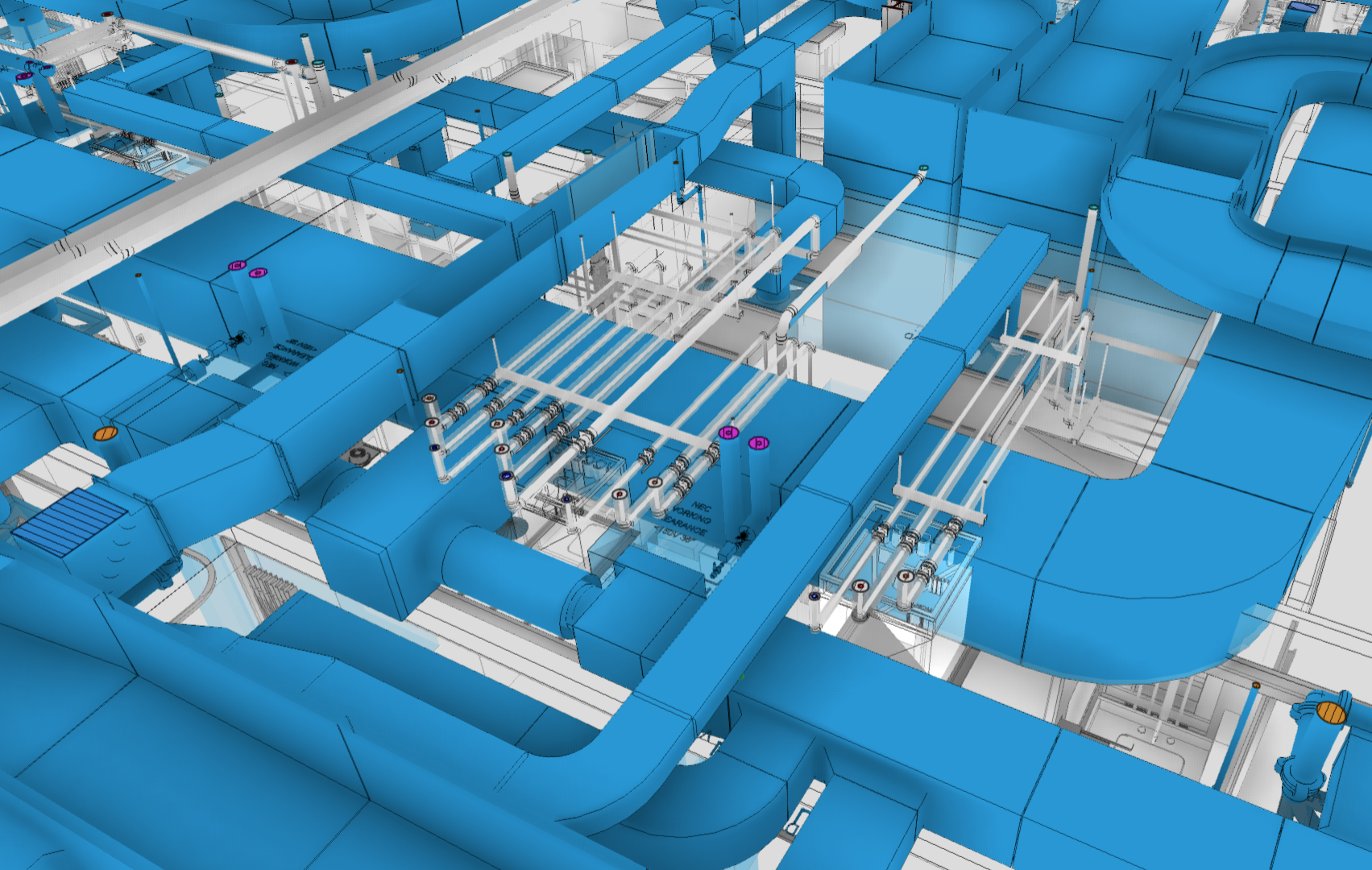

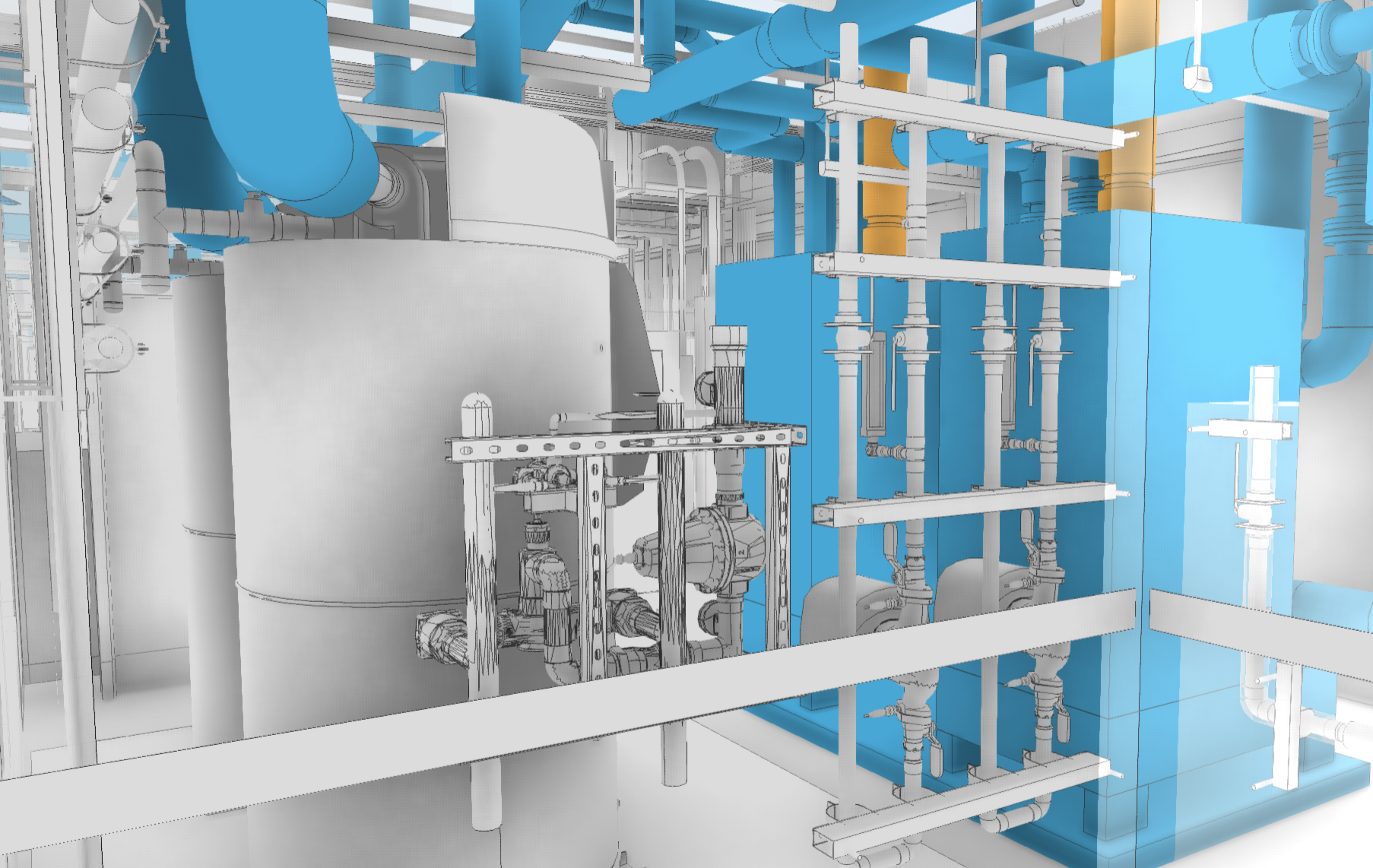
The Plumbing Systems We Modeled
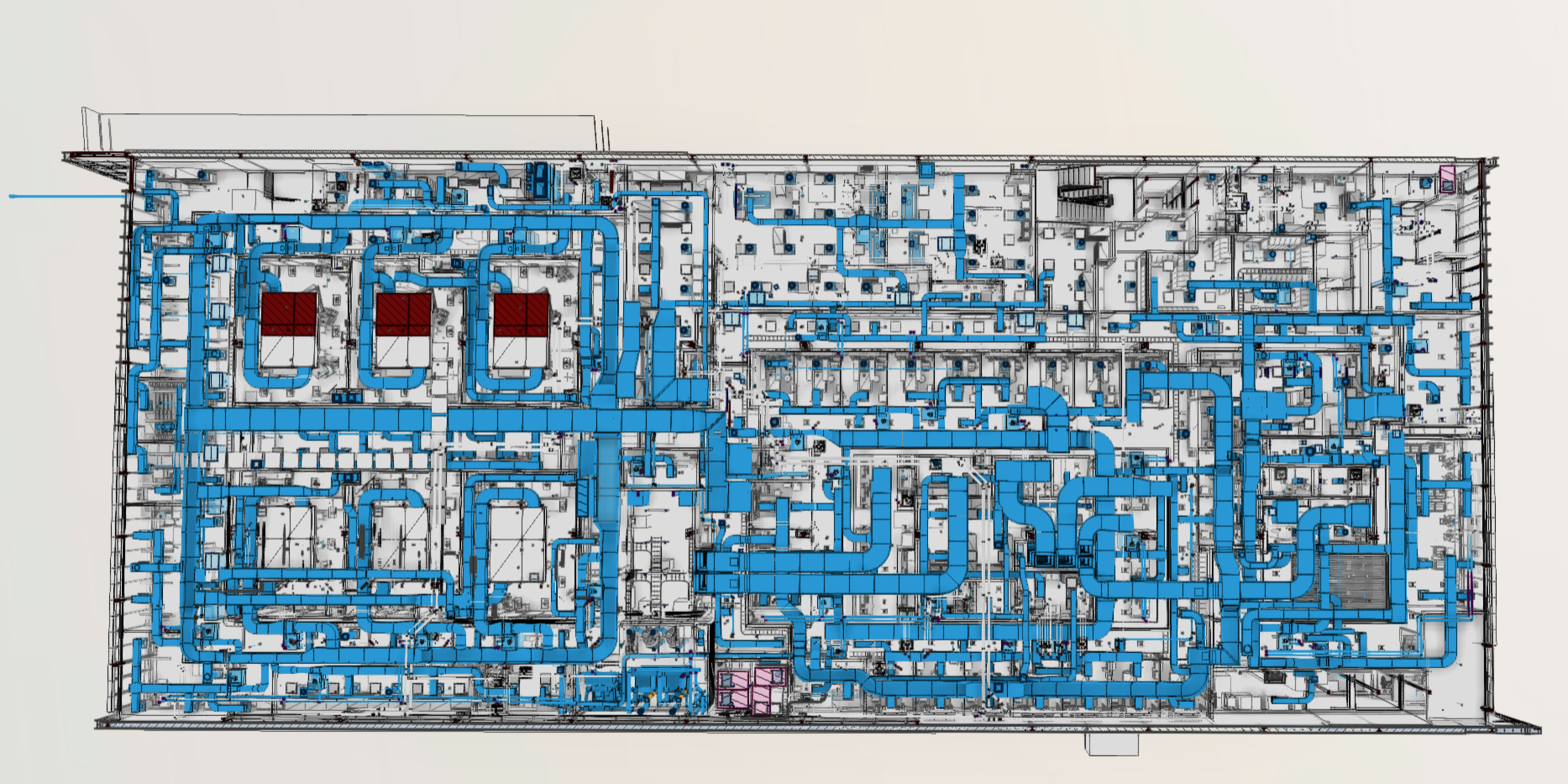
An Article 28 surgery center runs several plumbing systems at once, each with its own routing rules, slopes, and equipment. We modeled each one to LOD 350/400 — real pipe, real fittings, real valves — so the package that reached the field was buildable, not just diagrammatic.
- Sanitary waste & vent (DWV). Gravity systems that must hold pitch across a shallow plenum, with cleanouts and vents routed clear of structure and the other trades.
- Domestic water — cold, hot, and hot-water recirculation. Pressurized distribution sized and routed to fixtures, scrub sinks, and equipment, with recirculation to keep hot water at the fixture.
- Storm and roof drainage. A new roof means new roof drains, overflow drains, and leaders threaded down through occupied floors to the storm system.
- Specialty healthcare drainage. Hub and floor drains, trench drains, sterilizer and equipment drainage, and trap primers serving the OR, procedure, and support areas.
- Plumbing equipment and machinery. Water heaters and heating plant, hot-water recirculation and domestic booster pumps, thermostatic mixing and tempering valves, backflow preventers (RPZ assemblies), interceptors, sewage ejector and sump pumps, expansion tanks, and water-hammer arrestors — each modeled with real geometry, clearances, and service access.
Plumbing system scope reflects the contract documents Heleos VDC modeled and coordinated. Heleos VDC is not the engineer of record; equipment selection and system sizing are the design engineer's.
Our Workflow
- Translate the design into a fabrication model — we built the plumbing in Revit Fabrication directly from the CannonDesign and Cosentini contract drawings, modeling actual fabrication geometry (pipe, fittings, valves, and equipment) to LOD 350/400.
- Model real supports, sleeves, and offsets — hangers, supports, and penetrations were modeled with their true dimensions, so what cleared on screen cleared in the field, and so supports respected the project's vibration criteria.
- Run preliminary clash detection and remediate — we resolved plumbing conflicts against itself and the structure first, so the model reached the trade-coordination table already clean rather than full of obvious hits.
- Coordinate with the other MEP trades — we brought plumbing into a federated model with mechanical (Anron), fire sprinkler (Vanguard), and electrical (L.E.B.), and drove the conflicts to resolution before mobilization.
- Issue coordinated shop drawings — overhead and in-wall sections, elevations, and isometrics dimensioned off axis and grid lines, plus sleeve and box-out drawings, issued to the CM, design team, and ownership for review and approval.
Clash Detection & MEP Coordination
The plenum above an operating room is one of the most contested spaces in construction. Plumbing has to hold gravity pitch, ductwork needs its depth, sprinkler mains need coverage, and electrical and medical gas need their runs — all within nine feet floor-to-floor on the second level.
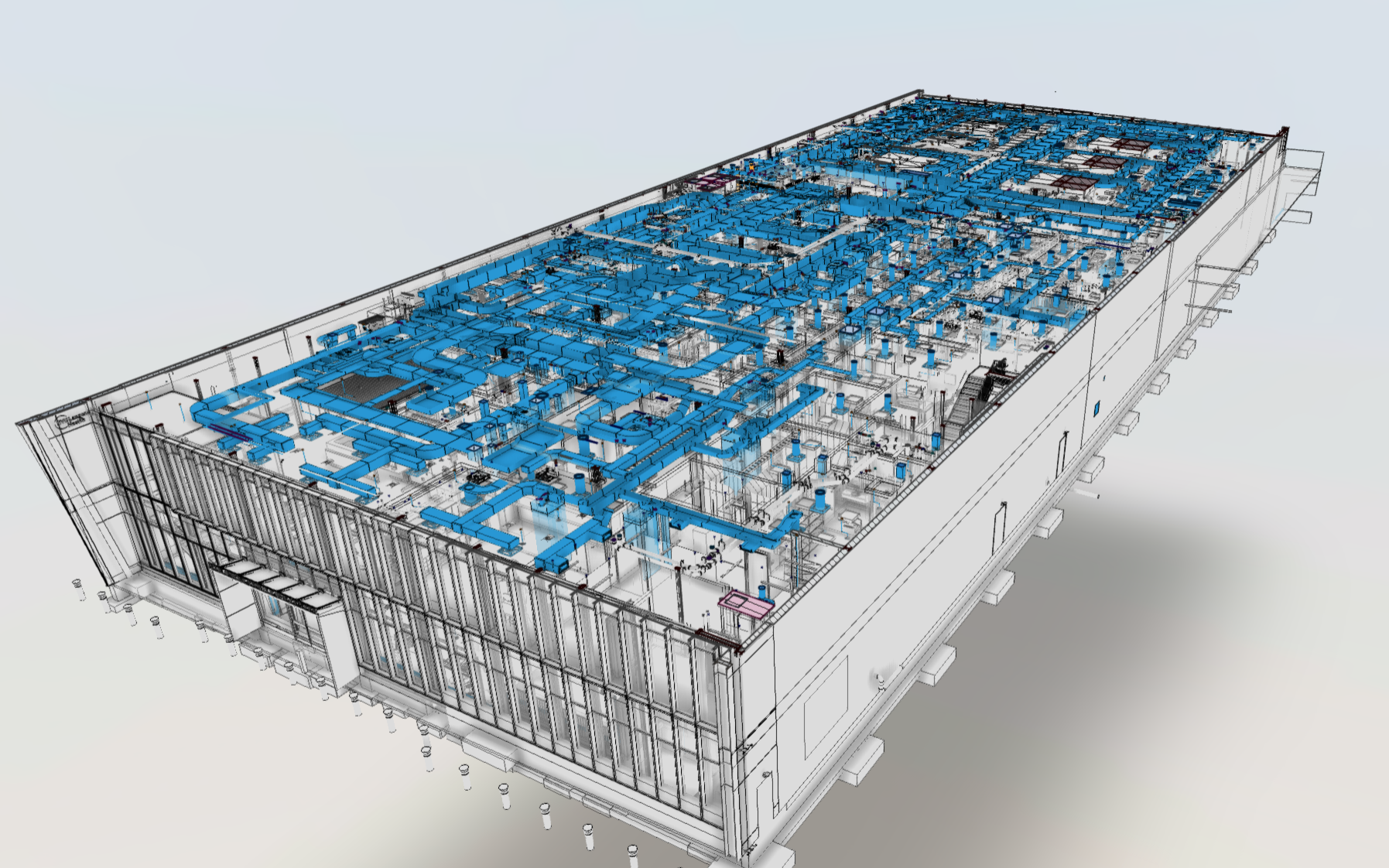
We federated every trade into a single coordination model and ran clash detection against structure and each other system. Each conflict was assigned, resolved, and re-checked — moving the fight off the job site and onto the screen, where a fix costs minutes instead of a change order.
Color tells the story. In the federated model, every trade carries its own color, so a conflict is obvious at a glance and easy to assign to the right contractor.
- Plumbing
- Duct / HVAC
- Fire sprinkler
- Electrical
We also coordinated plumbing penetrations and supports with structure ahead of pours and framing, and placed valves, cleanouts, and access panels where a maintenance crew can actually reach them once the ceilings close.
What We Delivered
- LOD 350/400 plumbing model in Revit Fabrication — fabrication-grade geometry built from the contract drawings, ready to detail, dimension, and install.
- Preliminary clash detection and remediation — plumbing conflicts resolved against structure before the model ever reached the trade-coordination table.
- MEP trade coordination — plumbing federated and coordinated with the mechanical, fire-sprinkler, and electrical trades to a conflict-free overhead and in-wall layout.
- Overhead and in-wall shop drawings — sections, elevations, and isometrics dimensioned off axis and grid lines, issued to the CM, design team, and ownership for review and approval.
- Hanger and support details — real supports modeled with real offsets, respecting the project's Article 28 vibration criteria, so what cleared on screen cleared in the field.
- Sleeve and box-out penetration drawings — coordinated penetrations issued for approval, keeping structure and trades aligned ahead of pours and framing.
Tools Used
- Autodesk Revit (Revit Fabrication)
- Autodesk Navisworks Manage
Results
By modeling the plumbing from the contract drawings and resolving clashes before trade coordination, the plumbing scope reached the field already vetted against structure and the other MEP trades — closing the gap between design intent and the building before installation began.
~60% — fewer in-field RFIs — a typical Heleos VDC outcome across projects run through a Heleos-led clash-detection cycle, shown for context; project-specific results vary by scope.
LOD 350/400
Fabrication-grade plumbing model built straight from the contract drawings.
55,000 SF
Coordinated across two stories of adaptive-reuse healthcare space.
Article 28
Healthcare-grade scope under strict vibration criteria.
Service & Location Summary
This Patchogue, New York project shows how Heleos VDC delivers fabrication-grade plumbing coordination, clash detection, and MEP coordination for Article 28 healthcare adaptive reuse on Long Island — turning the engineer's design into a coordinated, clash-free model so the trade contractor builds it right the first time. MODEL FIRST. BUILD ONCE.
Frequently Asked Questions
How did Heleos VDC develop the plumbing model for the NYU Langone Patchogue project?
Heleos VDC worked from the CannonDesign and Cosentini contract drawings — not a scan — building the plumbing in Revit Fabrication to LOD 350/400, modeling real supports and penetrations, running preliminary clash detection, and coordinating with the mechanical, fire-sprinkler, and electrical trades before installation began.
What makes plumbing coordination harder on an Article 28 surgery center?
As an Article 28 ambulatory surgery center, the structure and MEP systems had to meet strict vibration criteria set by the authority having jurisdiction, so pipe routing, equipment placement, and especially hangers and supports all had to respect those tolerances. Combined with tight floor-to-floor heights — 12 feet on the first floor and 9 feet on the second — there was little room above the ceiling for sanitary, domestic water, storm, and medical-gas-adjacent routing to share with ductwork, structure, and electrical.
What did Heleos VDC deliver for the NYU Langone Patchogue project?
An LOD 350/400 plumbing model in Revit Fabrication, preliminary clash detection and remediation, MEP trade coordination, overhead and in-wall shop drawings, hanger and support details, and sleeve and box-out penetration drawings — all issued for review and approval to the CM, design team, and ownership.
What was Heleos VDC's role on the project?
Heleos VDC delivered plumbing VDC for the project, engaged by the plumbing trade contractor, Lakeville Pace Mechanical. Heleos VDC is not the architect or engineer of record.
Project Location
196 East Main Street in Patchogue, NY — on Long Island's South Shore. NYU Langone Health is converting a long-vacant downtown retail building into a two-story, 55,000-square-foot ambulatory surgical center.
NYU Langone Patchogue Ambulatory Surgical Center — Patchogue, NY
Coordinates: 40.7654, -73.0151